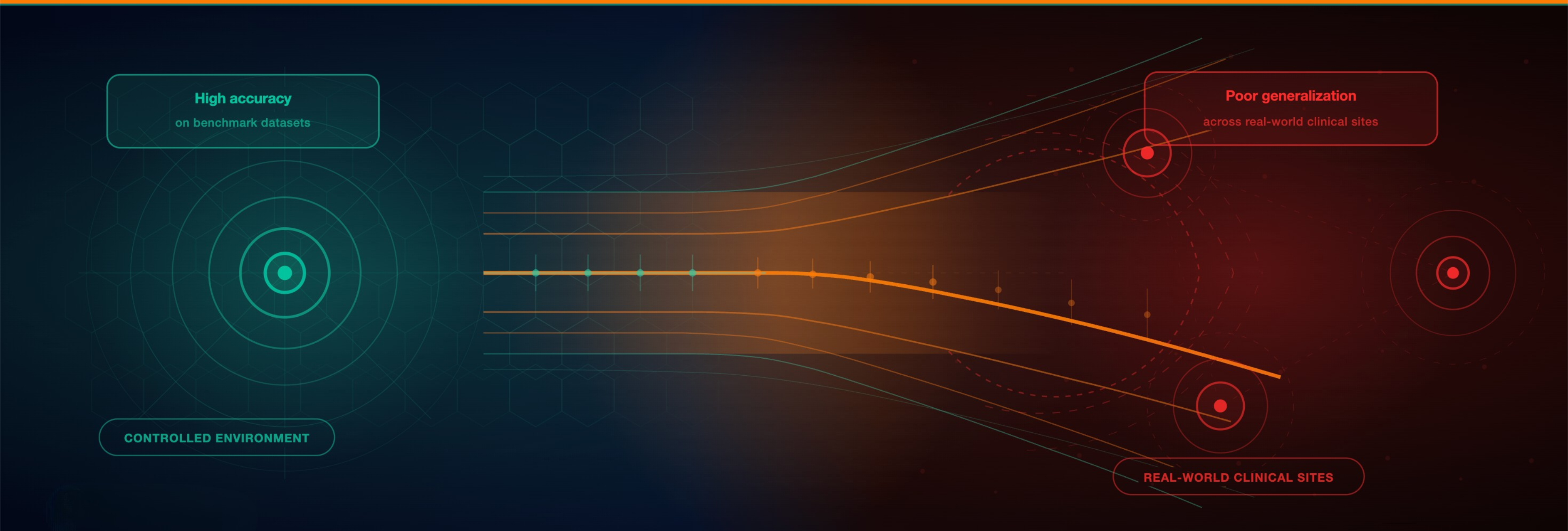
Artificial intelligence has achieved remarkable diagnostic accuracy in digital pathology. In controlled research settings, algorithms increasingly demonstrate performance comparable to expert pathologists. Yet, despite these advances, widespread clinical adoption remains limited. Recent evidence suggests that accuracy, while essential, is rarely the decisive factor in whether AI systems are embraced in routine pathology practice.
Accuracy Is Necessary But Rarely Sufficient
Multiple studies highlight a recurring paradox: high-performing AI models do not automatically translate into clinical use. While accuracy is often the headline metric, pathologists and lab directors consistently point to other concerns that outweigh marginal performance gains. These include uncertainty around reproducibility across scanners and staining protocols, limited transparency in how results are generated, and the absence of clinical guidelines endorsing routine use.
Equally important is the issue of trust. Pathologists remain accountable for diagnostic decisions and are therefore cautious when AI outputs lack transparency or clear validation pathways. Survey-based research shows that uncertainty around how algorithms reach their conclusions, combined with the absence of guideline endorsement, limits confidence—even when accuracy appears high.
Workflow Friction Is the Real Adoption Barrier
Beyond trust, workflow integration emerges as one of the strongest determinants of whether AI is used at all. Surveys of clinical laboratories reveal that most digital pathology tools are currently adopted for supportive tasks such as slide sharing or tumor board preparation rather than for automated diagnostic decision-making.
AI systems that require additional validation steps, manual data transfers, or parallel IT infrastructures often increase workload instead of reducing it. Narrative reviews across healthcare show that even highly accurate AI systems struggle when introduced into heterogeneous, real-world environments with legacy systems, staffing constraints, and variable digital maturity. Adoption, therefore, depends less on model performance and more on how seamlessly AI aligns with existing diagnostic routines.
From Model Performance to System Readiness
The literature increasingly points toward a shift in how success should be measured. Instead of asking whether an AI model is accurate, the more relevant question becomes whether the surrounding system is ready.
This includes:
- Interoperability with laboratory information systems
- Robustness to real-world variability
- Transparent failure handling
- Clear pathways for clinical validation
- Monitoring after deployment
Importantly, adoption accelerates when AI is designed as part of a broader digital pathology ecosystem rather than as a standalone tool. Systems that embed AI seamlessly into existing workflows while supporting collaboration, auditability, and continuous improvement are more likely to move beyond pilot projects and into routine clinical use.
These insights are shaping how digital pathology solutions are being built today. Rather than optimizing AI in isolation, the focus is shifting toward systems that prioritize workflow integration, transparency, and clinical usability from the outset.
At PAICON, this perspective guides how we approach digital pathology: treating AI not as a standalone feature, but as part of an end-to-end diagnostic environment designed to support pathologists in real-world practice.
Read how PAICON approaches real-time AI integration in digital pathology in our latest whitepaper.
References
- Tizhoosh HR, Pantanowitz L. Artificial intelligence and digital pathology: challenges and opportunities. J Pathol Inform. 2018;9:38.
- El Arab RA, et al. Bridging the gap: from AI success in clinical trials to real-world healthcare implementation. Healthcare (Basel). 2025;13(7):701.
- Bessen JL, et al. Perspectives on reducing barriers to adoption of digital pathology technology by clinical labs. Diagnostics (Basel). 2025;15(7):794.
- Abdelwanis M, et al. AI adoption challenges from healthcare providers’ perspective. Safety Science. 2026;193:107028.