
PaiX Edge Data curation for better insights.

PaiX Edge is PAICON's intelligence layer inside the hospital. It turns reports, scans and lab exports, in whatever format each site produces, into one de-identified, analysis-ready table. Your data stays where it is; only structure leaves.

PaiX Navigator EGFR+ NSCLC
DASHBOARD INSIGHTS REQUESTS MY DATA
2,847CASES 60+SITES
PATIENTS BY REGION COHORT GROWTH
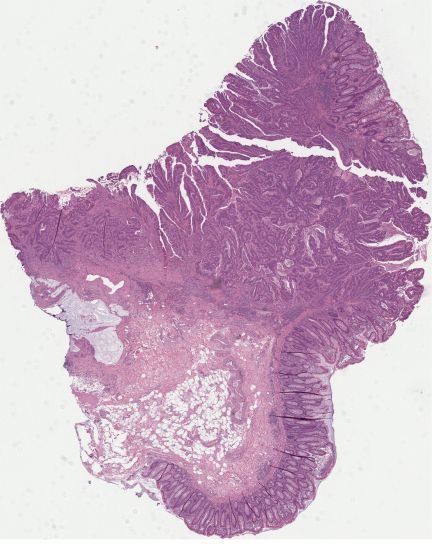
H&E pathology slide captured at the point of care PATHOLOGY
RADIOLOGY
GENOMICS
LABS
ON-SITE · FIREWALL
QUEUE1,204
PHI0 LEAVING
PATIENT RECORD
NAME
DOB
DIAGNOSIS
KEPT
MODALITIESLINKED
PAIX EDGE INGESTION & NORMALIZATION
PaiX
Edge
WSI
DCM
HL7
CSV
RAW DATA INFLUX
PaiX Navigator Insights on top
PaiX Edge Curated inside the hospital
Raw data influx Many hospitals · many formats
How Edge works

Sources: many hospitals, many formats.

De-identify: personal data never leaves.

Extract: free text becomes fields.

Map: local terms, one vocabulary.

Harmonised table: one table, quality checked.

A PDF pathology report from Germany, DICOM studies from India, HL7 feeds from Kenya, a CSV export from Brazil. Nothing is comparable yet, and nothing is pre-filtered.

  • Reports, scans, lab exports, records: any modality
  • Each site keeps its own systems and conventions
  • Edge connects on-site, no data migration needed

Inside the hospital, Edge removes names, dates of birth, record numbers and addresses before anything else happens. Clinical content stays intact.

  • PHI masked in text, headers and image metadata
  • Runs behind your firewall, on your hardware
  • GDPR and local rules met by default

Scanned and narrative reports are read with OCR and language models. Diagnosis, site, grade, stage and biomarker status are pulled out as structured values.

  • OCR for scanned and faxed documents
  • Report parsing for diagnosis, staging, biomarkers
  • Every value keeps a pointer to its source

Three hospitals describe the same tumour in three languages and coding habits. Edge maps each to standard terminologies so they can finally be compared.

  • ICD-10 and SNOMED CT for diagnoses
  • Units, dates and staging systems normalised
  • Modalities linked to the same patient

The result is a single, de-identified, analysis-ready dataset in one schema. Quality checks run on every record before it is released for research or into PaiX Navigator.

  • One row per patient, same columns for every site
  • Automated QC: completeness, ranges, duplicates
  • Ready for cohorts, benchmarking and AI
See it in PaiX Navigator

Illustrative demo · data shown is for illustrative purposes only

Plays automatically · tap any step to jump
Click any step to jump
Raw sources
Sources Many formats
De-identify PHI removed on-site
Extract OCR · report parsing
Map ICD-10 · SNOMED CT
Harmonised table Ready for PaiX Navigator
Use cases

What partners ask us for.How Edge helps.

Most requests start the same way: the data is there, but nobody can use it. Two examples of where we started and what changed.

Hospitals & clinics
The situation

They did not know what their data held.

A partner centre held two decades of reports, scans and lab exports across four systems. Nobody could say how many cases of a given subtype they had, so the archive sat unused.

What we did

We harmonised it on-site and gave them answers within weeks.

  • One de-identified table across every system, nothing leaves the hospital
  • Their first reliable case counts by diagnosis, stage and modality
  • Rare subtypes surfaced, with imaging and labs attached
Pharma R&D
The situation

Every site answered a different question.

A research team pulled data from sites in three regions. Each export used its own coding, units and structure; reconciling them by hand ate most of the study timeline.

What we did

We mapped every site onto one vocabulary.

  • Local terms mapped to ICD-10, SNOMED CT and LOINC; units normalised
  • One schema across regions, so sites became directly comparable
  • Feasibility and cohort counts in days, full audit trail per record
Let's talk

Your data, your site. Edge, tailored to it.

Every hospital and every study is set up differently, so Edge is never one-size-fits-all. Tell us which systems and formats you work with and where the bottleneck is; we come back with a scoped plan for your site.

  • Deployed on-site, so identifiable data never leaves your building
  • GDPR-compliant by default
  • Any modality: imaging, pathology, omics, labs and records
Back to top ↑